Blue-sky visions: on Economic Survey 2018-19
The ambitions of the Economic Survey depend on the implementation of its ideas
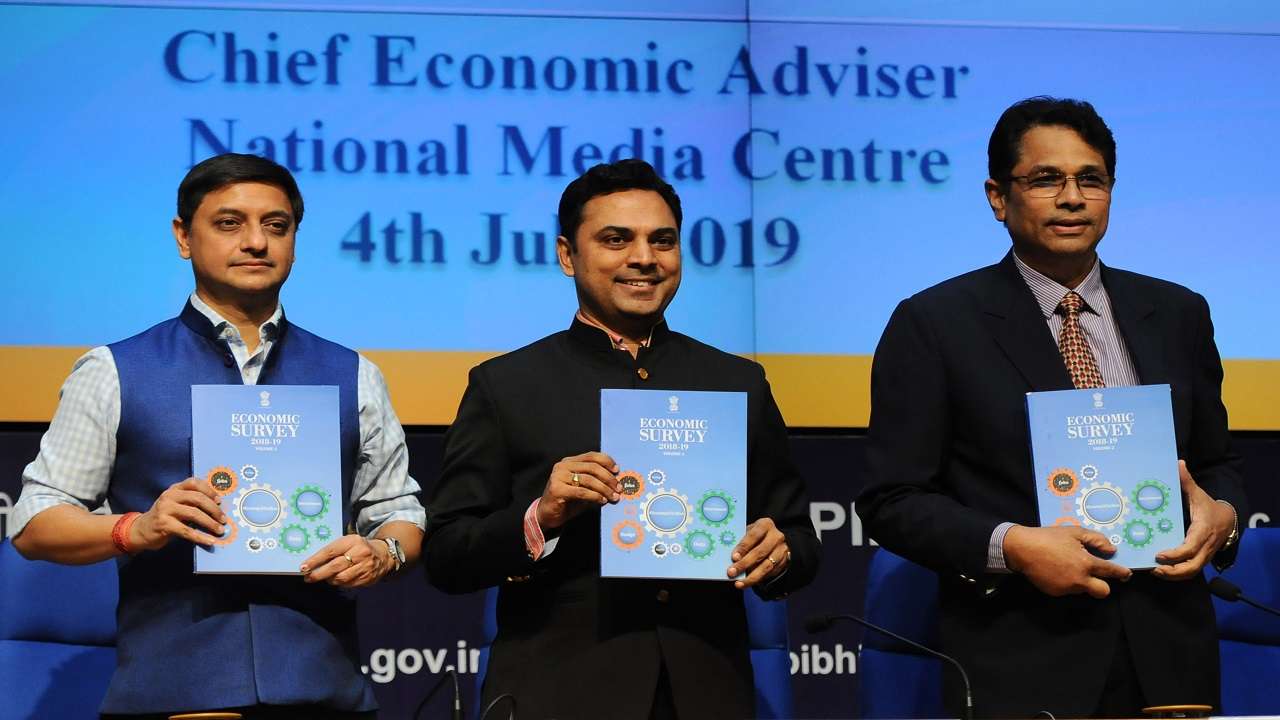
The Economic Survey for 2018-19 reflects the views of its principal author, Chief Economic Adviser (CEA) Krishnamurthy Subramanian.
The CEA has made bold to use the new government’s first economic assessment-cum-agenda setting exercise to posit a range of ideas that he attributes to “blue sky thinking”. From an embrace of a “world that is in constant disequilibrium”, and the need therefore to adapt to it, to the stress on drawing upon Richard Thaler’s work in the behavioural economics of ‘nudge’ for addressing issues including gender equality, savings and tax compliance, the survey attempts to reset multiple paradigms.
Image Credits: http://bit.ly/2xvRv6Z
The broad goal is to help drive economic strategy to achieve sustained real GDP growth of 8% so as to enable fulfilment of the government’s grand vision of making India a $5 trillion economy by 2025.
The first task is to take stock of the economy’s current state. The CEA is cautiously confident that the slump in investment, which he rightly identifies as the key driver of growth, jobs and demand, has bottomed out. Setting the huge electoral mandate for the government as an enabler that would “push the animal spirits of the economy”, the survey projects real GDP growth to rebound to 7% in 2019-20.
But the CEA doesn’t shy away from flagging ‘consumption’ as being crucial in determining the growth trajectory in the current fiscal year, and in pointing out its vulnerability to the health of the monsoon-dependent rural economy.
On the fiscal front, the survey is even less optimistic. It lists several challenges to achieving the fiscal deficit target of 3% of GDP by March 2021: the “apprehensions of slowing of growth” and the implications for revenue collections; the shortfall in GST collections and the imperative that it places on revenue buoyancy this year; the hunt for resources to fund the expanded PM-KISAN scheme, Ayushmaan Bharat and other government initiatives; and the impact on oil purchase prices due to the U.S. sanctions on import of crude from Iran.
It is, however, on the policy prescriptions front that the CEA comes into his own. Central to the recommendations is the focus on triggering a self-sustaining “virtuous cycle” of savings, investment and exports.
To achieve which, he suggests, presenting data as a ‘public good’, ensuring policy consistency and reducing the cost of capital.
Micro, small and medium enterprises must be nourished, especially firms that are most likely to boost both job creation and productivity, and labour laws made flexible.
Source: The Hindu

You may also like
Linking Aadhaar-GST Registration

CONTROLLED HUMAN INFECTION MODEL (CHIM)